
Opening reception Thursday, September 10, 6-8pm
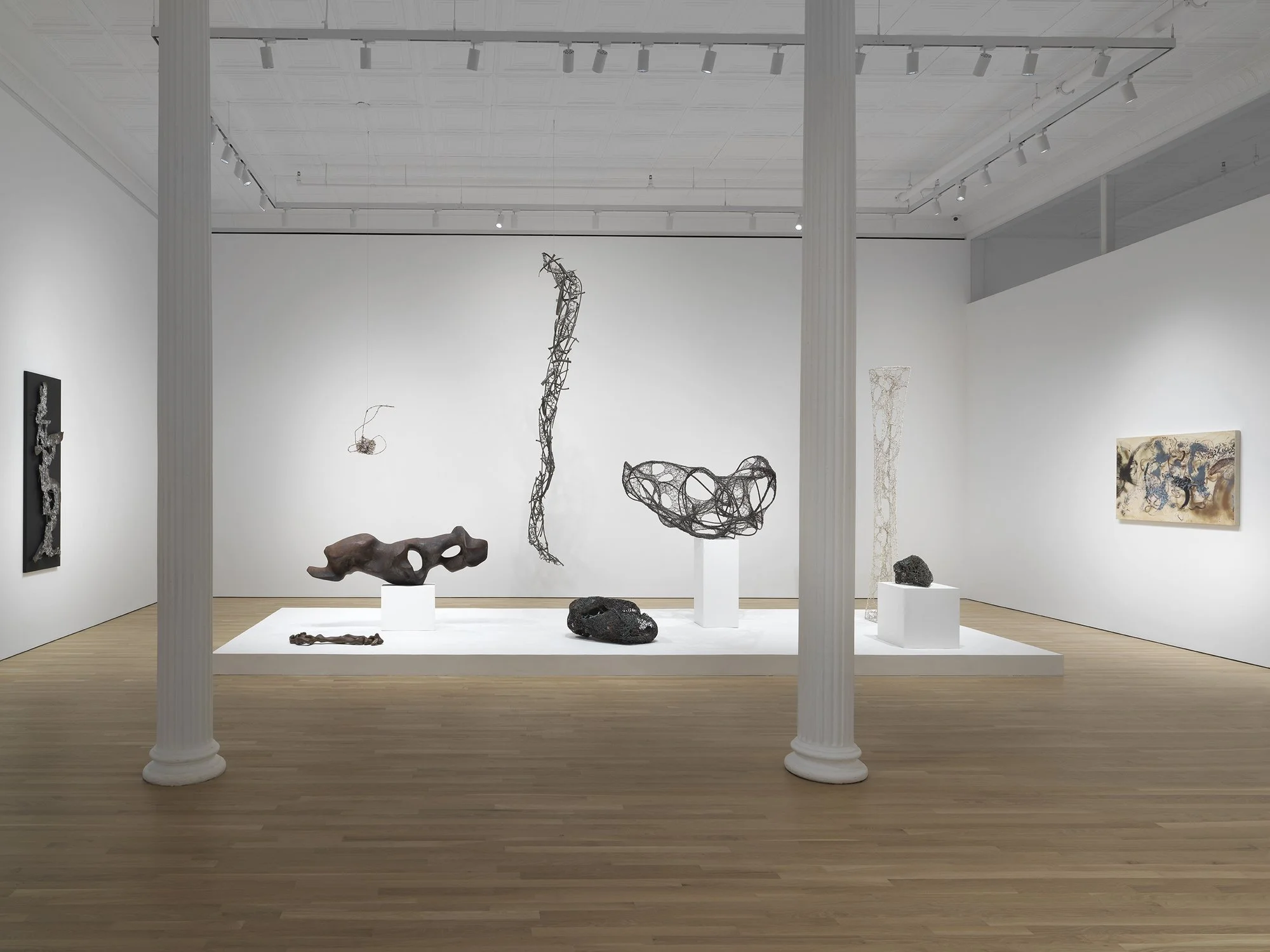
Ortuzar is pleased to present Claire Falkenstein: San Francisco, Paris, Rome, the gallery’s debut exhibition of work by the American artist whose gates of tangled iron, set with chunks of Murano glass, have welcomed visitors to the Peggy Guggenheim Collection in Venice since 1961. The exhibition follows Falkenstein from her formative decades in San Francisco to the avant-garde centers of postwar Paris and Rome, assembling some twenty works—several unseen since the 1950s—in copper, glass, iron, aluminum, plastic, wood, and clay. Together they trace a conviction formed early and held through every change of place and material: the urge, as she described it, to “break up the volume”—to open the closed mass of sculpture and challenge the distinction between interior and exterior space. On view from September 10 through October 31, the exhibition is organized in collaboration with the Claire Falkenstein Foundation and marks the gallery’s first solo presentation of the artist’s work since announcing its representation of the Foundation in 2025.
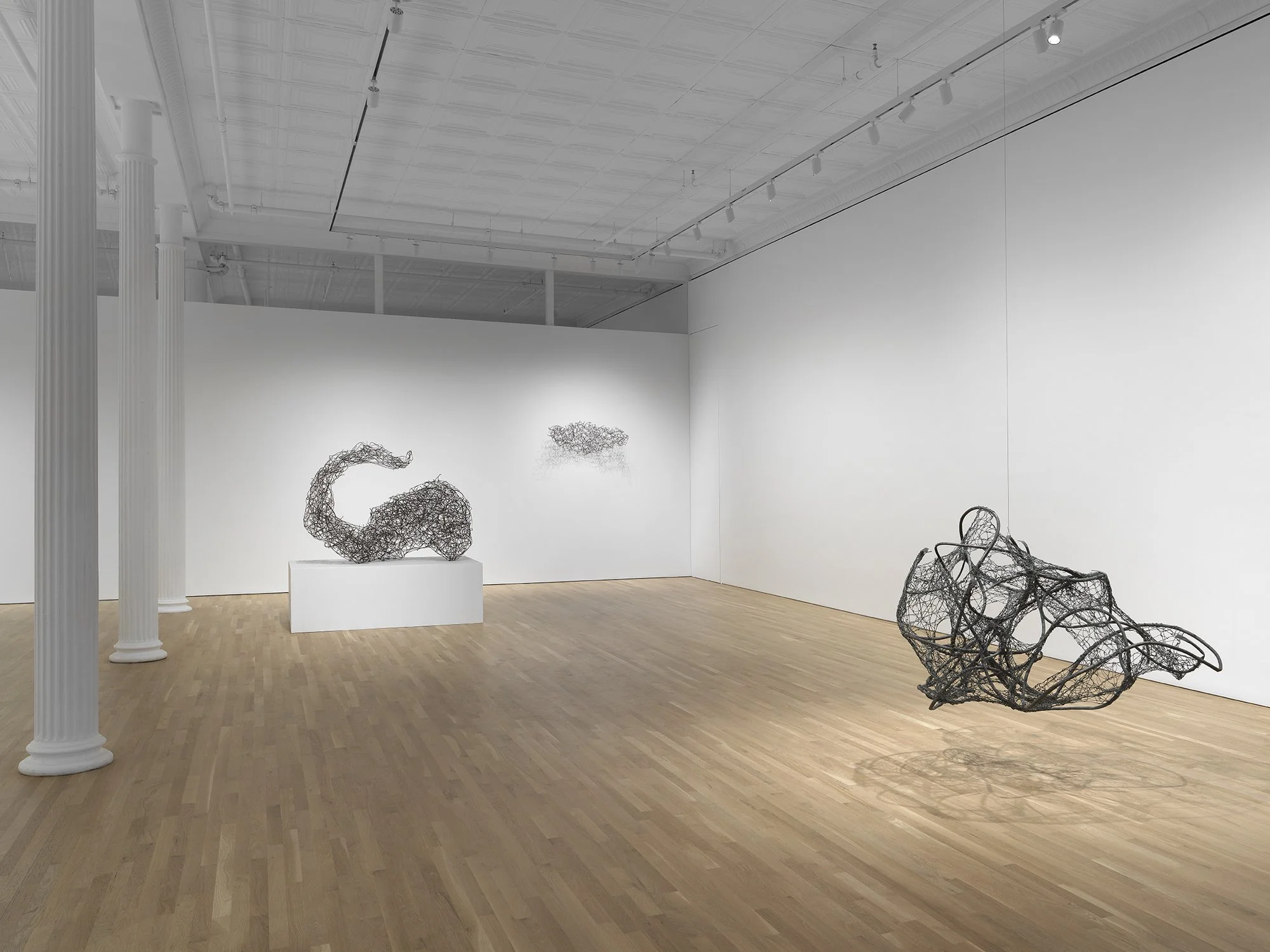
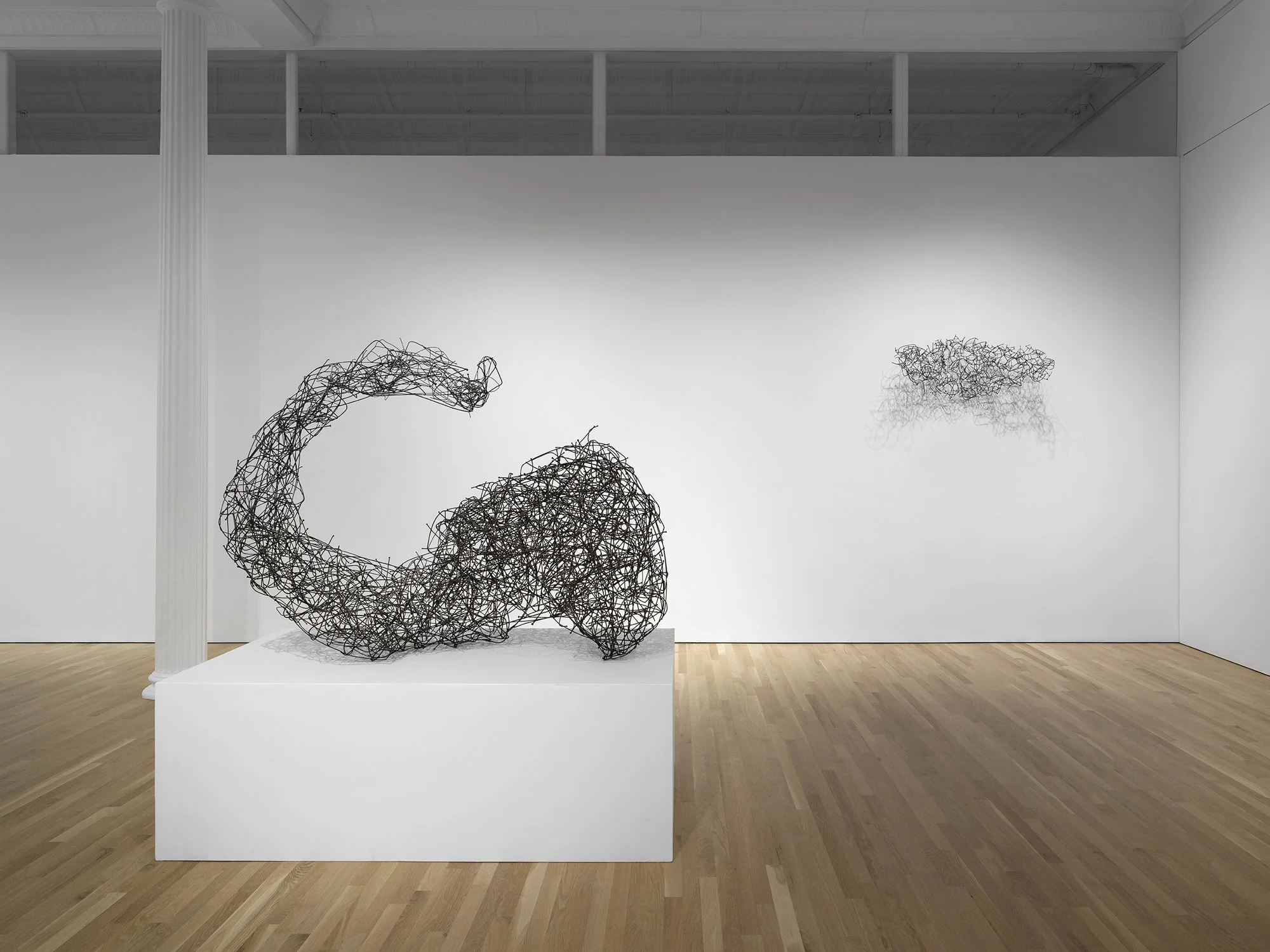
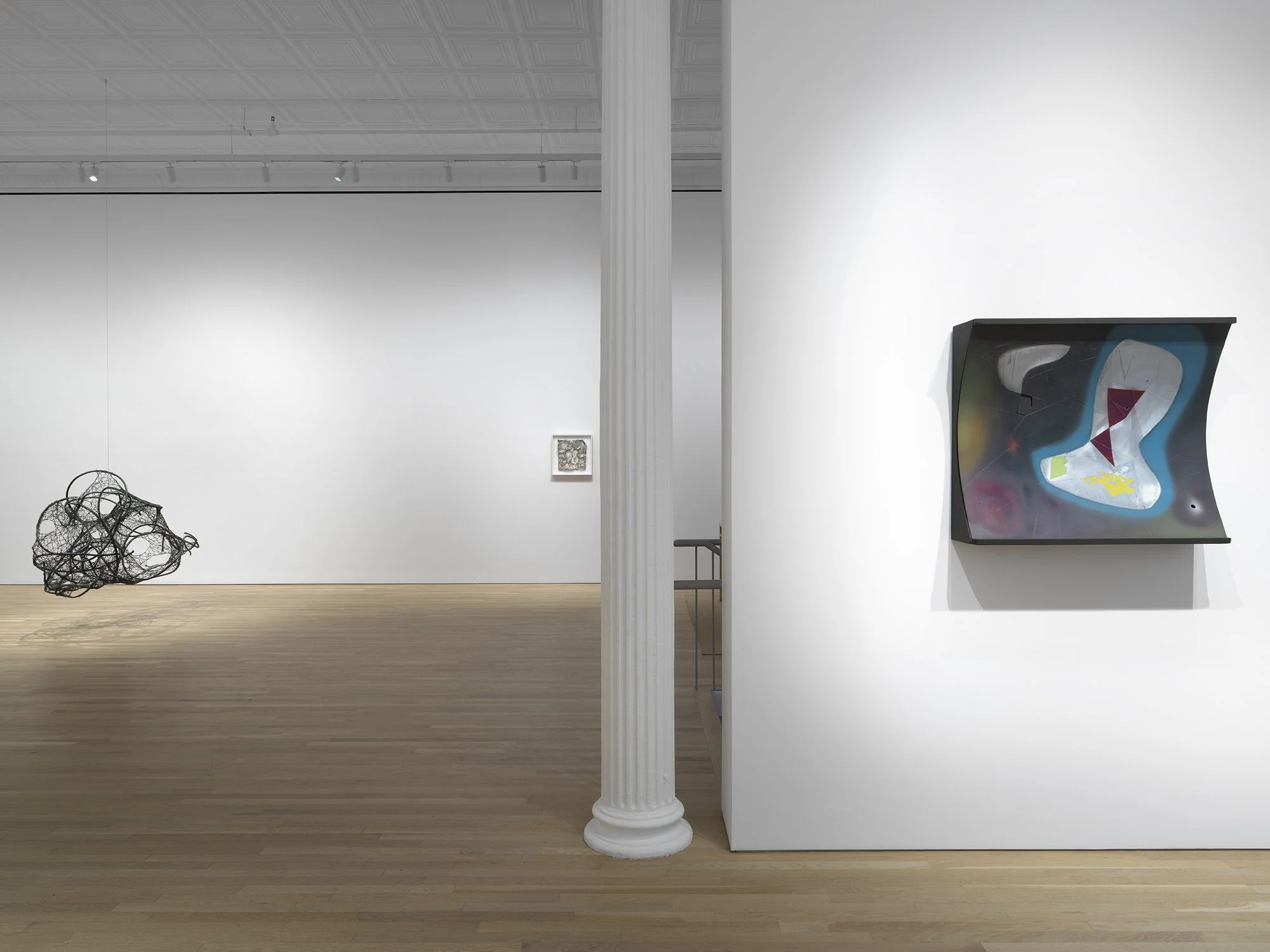
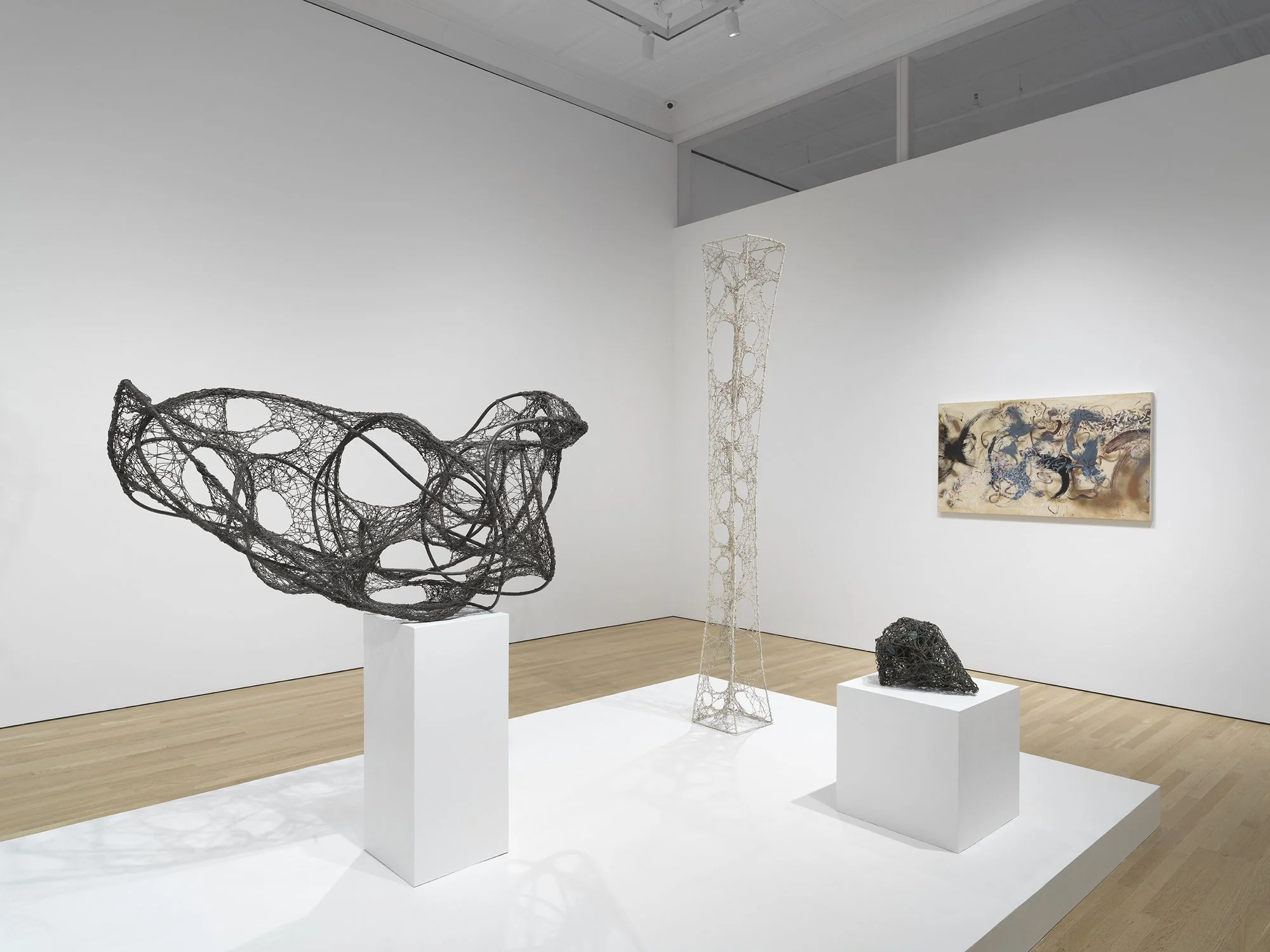
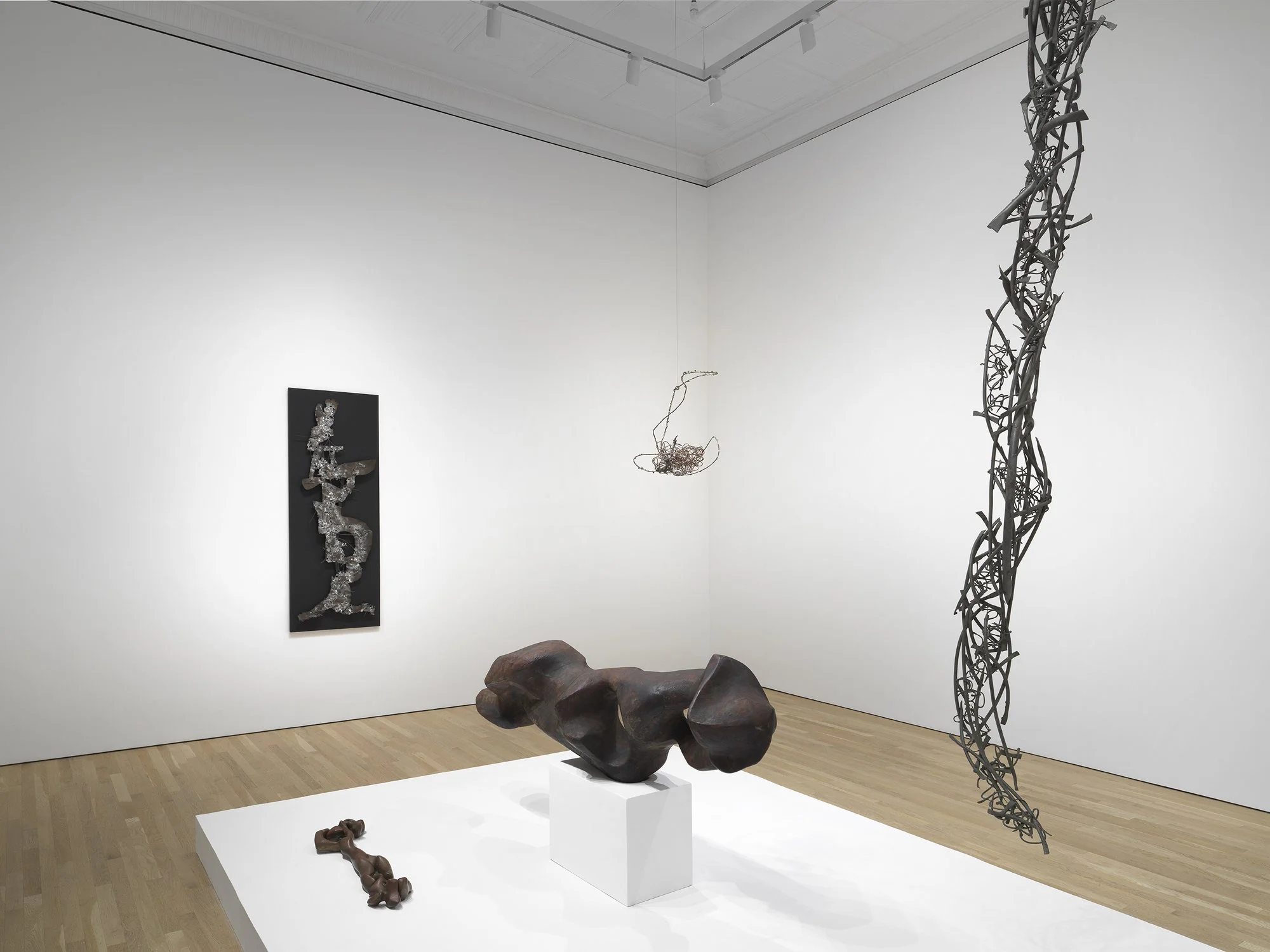
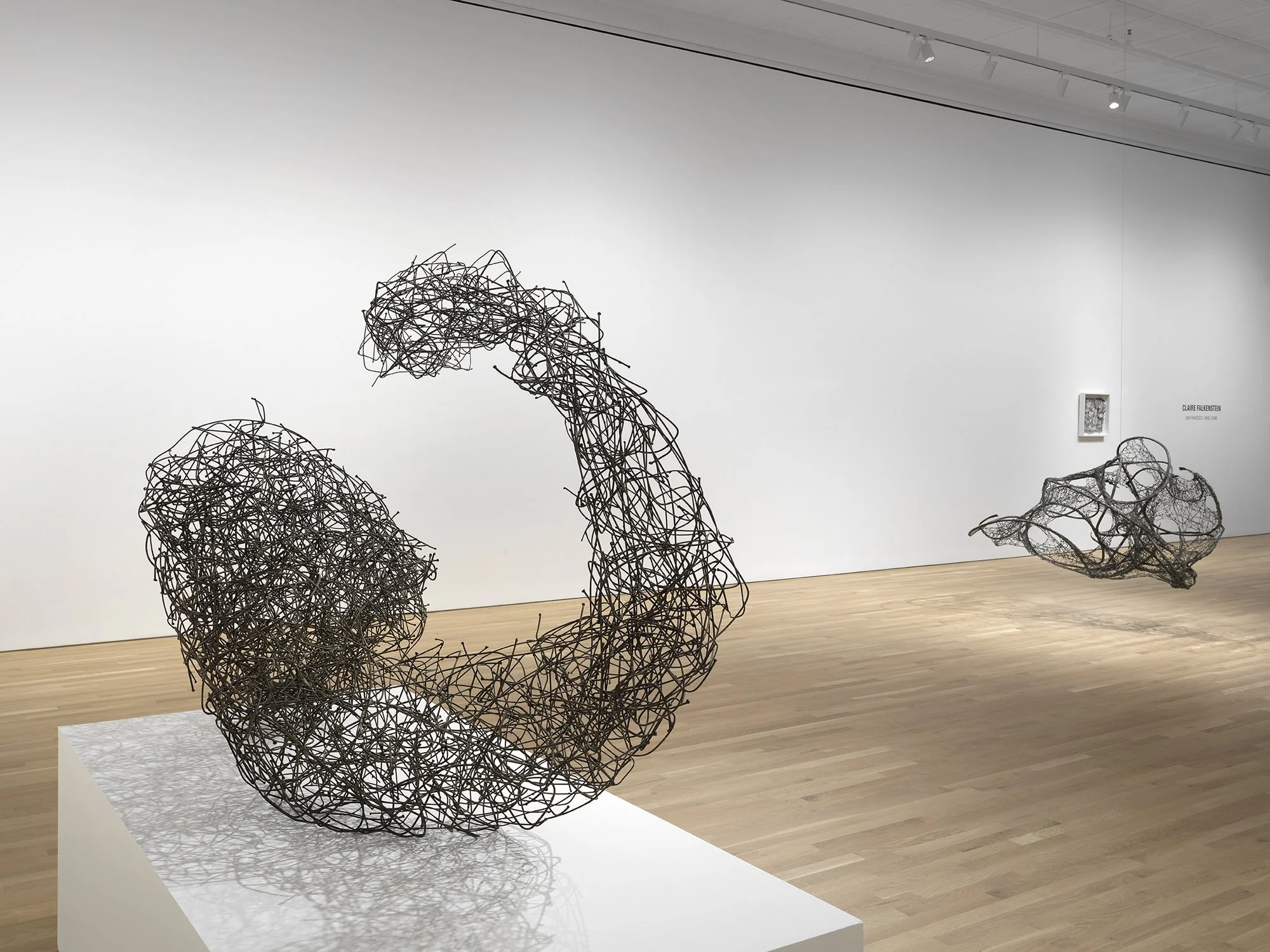
At the center of the exhibition are the Suns, the series Falkenstein called “the most complete resolution of my work.” Begun in Paris in early 1954, they are built from lengths of metal—first iron, then bronze and copper, finally hollow copper tubing—wrapped and interwoven into webs brazed at every intersection. The accumulated joints make the webs self-supporting—transparent structures that contract into dense thickets or open into airy networks, “all convoluted outside and in,” as she described them. Sun #11 (1957) is an open corona of brazed bronze wire more than five and a half feet across. Last shown at Galerie Stadler in 1957, at Falkenstein’s first Paris solo exhibition, where she was famously photographed standing inside it, the work is on view here for the first time in nearly seventy years. The suspended Sun #14 (1958) sets two weights of copper against each other: muscular arcs of tubing draw the principal trajectories, with membranes of threadlike wire knotted between them.
Claire Falkenstein (1908–1997) was born in Coos Bay, Oregon, studied art at the University of California, Berkeley, and had her first solo exhibition in 1930, while still a student. Her only formal training in sculpture was a 1933 summer course at Mills College with Alexander Archipenko. She moved energetically through whatever materials came to hand—glazed ceramic, laminated plastics, painted aluminum, Hydrocal, carved wood—and during the war years taught herself to weld, working with scrap metal as supplies ran short. The San Francisco Museum of Art (today known as SFMOMA) showed her work more than sixty times between 1935 and 1950, five of those exhibitions devoted to her alone. From 1948 she taught at the California School of Fine Arts (later known as the San Francisco Art Institute) alongside Clyfford Still, who became a lifelong friend.
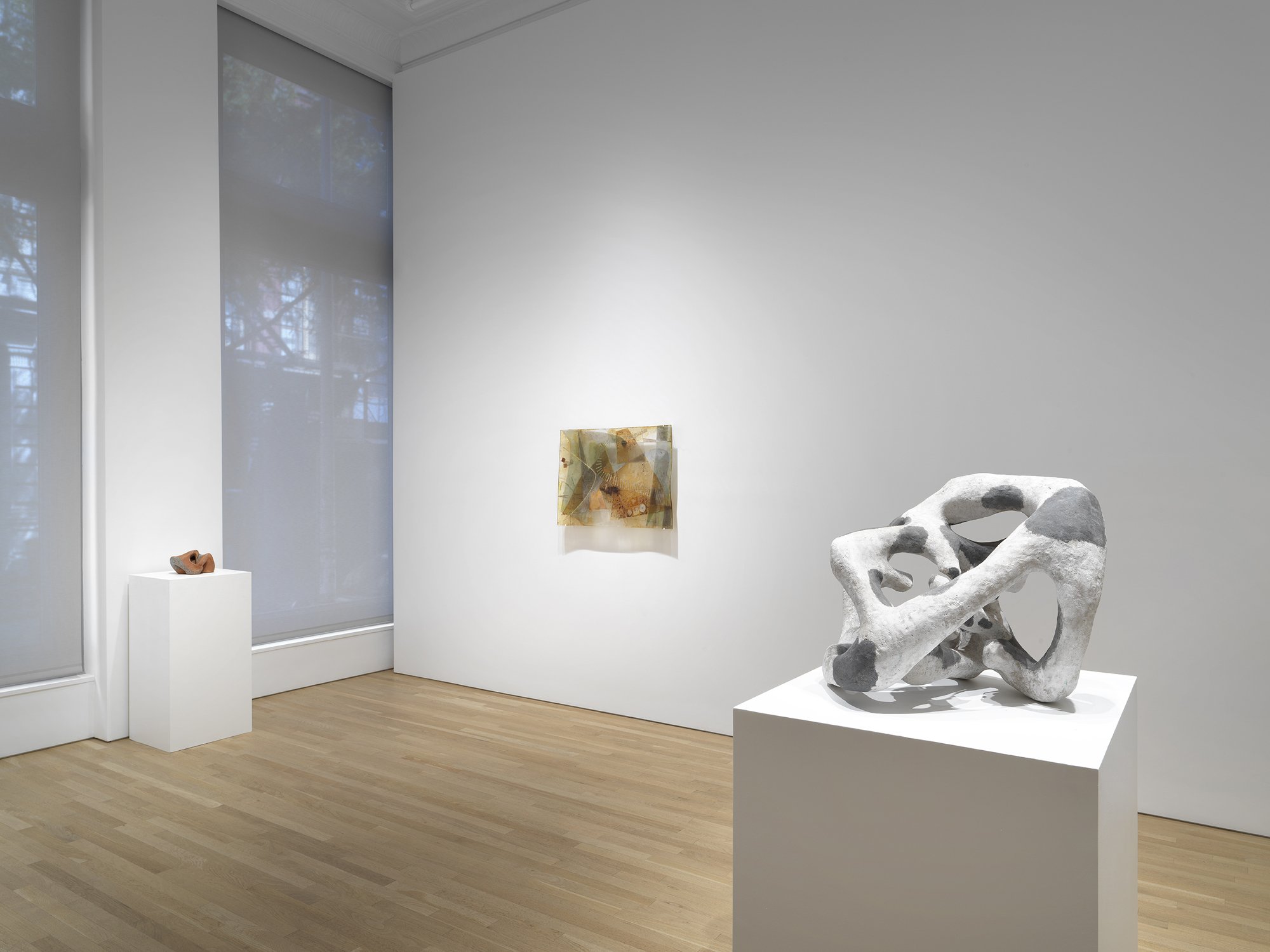
Her formal interests are legible in the earliest works on view, all made in California. Hand-built ceramics from 1938–40 run a single clay surface from outside to inside without interruption. An untitled relief of 1947 is on view, made of window screening, wire, paper, and small machine parts laminated in cast amber resin, each layer visible through the next. The work comes from Transparency and Reflection, a body of plastics-based work begun in 1946, among the first sustained uses of the material in American art. One of her last California works, Sequoia (1949–50) is made from a log she found in the woods while teaching at Pond Farm, a summer workshop for experimental arts in Northern California, that she carved by hand outdoors, “in the midst of the great trees, out in a field.”
By 1950 Falkenstein felt she had reached the limits of what the Bay Area could offer, and her work was already crossing the Atlantic: the Salon des Réalités Nouvelles showed her sculptures in Paris in 1948 and 1949, before she had ever seen the city. In August 1950 she sailed for Europe on a month-long package tour; in October she turned in her return ticket. She stayed thirteen years, settling into a one-room studio on the rue de Savoie in Paris. Of those first months she later recalled: “no money, not knowing the language, not knowing a soul, just alone. And I wasn’t afraid at all.”
In June 1952 the critic Michel Tapié visited her studio, drawn by her new work in metal. He was then assembling the position he would call art autre—an “art of another kind,” free of inherited form, geometric and figurative alike, staking everything on raw matter and gesture. In Falkenstein’s work he saw his argument extend into three dimensions. That December he included Architecture Organique (1951), a suspended structure of iron wire and lead on view here, in the exhibition Un Art Autre, at Studio Paul Facchetti, which gave Tapié’s group its name. Shown alongside paintings by Jackson Pollock and Jean Dubuffet, Falkenstein was one of the movement’s only sculptors.
Another invitation from Tapié to contribute to an exhibition in Rome precipitated a material invention. Unable to afford casting, she built the work directly, bending and brazing bronze and iron wire until the web held its own shape—a method she said came “out of poverty,” and which Tapié praised as “almost a new material coming out of her hands.” The first Suns followed within months, and when she showed one that October in Individualités d’aujourd’hui—Tapié’s inaugural exhibition for the Galerie Rive Droite—she staged it beside Sequoia, shipped from San Francisco to Paris through the Panama Canal. The pairing made the continuity unmistakeable: one pursuit, carried from California to Paris and from wood into metal.
Tapié’s network reached beyond Paris. In Rome he advised Galleria Spazio, whose founder, the architect Luigi Moretti, commissioned a sculpture for the gallery’s entry stair. Falkenstein proposed a floor-to-ceiling work that would double as the rail. Moretti asked her to add glass, so that “when the sun comes through the door, it will cast color onto the floor and into the air.” She resolved to fuse the glass directly to the metal. His engineers said it could not be done—the materials cool at different rates, and the glass would crack—so she packed chunks of glass into the brazed lattice and fired the whole structure in a kiln, finding that enough glass melted into the form to hold. The rail, her first work in glass, was in place for Spazio’s June 1954 opening, and the process, which she called Fusion, entered the Suns almost immediately—Sun #4 (1954), on view here, carries inclusions of fused glass in its web. Through Moretti came a second commission, the iron-and-glass gates (1957) for Villa La Saracena, the seaside villa he designed for Princess Pignatelli. Peggy Guggenheim admired them, and her own gates followed in 1961.
Copper tubing entered the work in spring 1958, when a fall en route from Milan to Paris left her working from bed. To realize a commissioned hanging stage set for the choreographer May O’Donnell, Falkenstein turned to hollow copper tubing, which she could shape by hand. Copper tubing gave her larger, more open forms and a readier bond with melted glass. “I will stay with copper tubing,” she decided, “which is for me the gutsiest medium.” Its effect registers in two works on view: Sun #13 (c. 1958), heavy arcs of tubing netted with hand-knotted copper mesh, and Elaborated Line (1958), curved segments brazed into a nine-foot line descending from a single point of suspension.
Marin R. Sullivan’s biography of the artist is forthcoming from Getty Publications in 2027, and Claire Falkenstein: Zero to Infinity, curated by Rachel Jans, will open at the San Diego Museum of Art in November 2027.
Learn More